Key Takeaways
- Self-harm often happens in secret, so parents need to watch for unexplained cuts, bruises, or burns (typically on the arms, thighs, or stomach), along with frequent unusual scarring patterns that don’t match your teen’s explanations.
- Behavioral and emotional warning signs are just as important, including wearing long sleeves or pants even in hot weather, withdrawing from friends and family, sudden mood swings, and increased irritability or emotional numbness.
- Watch for hidden tools and changes in habits, such as keeping sharp objects, razors, or first-aid supplies in their room, and spending unusually long periods alone in the bathroom or bedroom.
- Respond with empathy, not alarm. Approach your teen calmly and without judgment, listen without dismissing their feelings, avoid punishing or shaming them, and seek professional help as soon as possible.
- At Clearfork Academy, we offer specialized care for teens struggling with self-harm. Our treatment center provides a full continuum of care, including residential treatment, PHP, IOP, and outpatient programs, combining evidence-based therapies with family involvement, medication management, and holistic activities to help your teen heal.
Recognizing the Warning Signs of Self-Harm Could Help You Save Your Teen
Self-harm among teenagers is a growing and often hidden issue, and many parents don’t realize it’s happening until a crisis forces it into the open. Teens who self-harm typically go to great lengths to hide their behavior, which is why knowing the warning signs is so important.
These can include unexplained cuts, bruises, or burns (often on the arms, thighs, or stomach), wearing long sleeves or pants even in hot weather, frequent “accidental” injuries, and withdrawal from friends and family. When your teen exhibits extreme emotional reactions to stress and keeps sharp objects or hidden supplies in their room, it can also be a warning sign to look out for.
Self-harm is often a coping mechanism teens use to manage overwhelming emotions, numbness, or trauma they don’t know how to express. That’s why understanding the signs, approaching the situation with empathy, and getting the right professional support can make all the difference.
Clearfork Academy: Texas’ Teen Treatment Center for Drug, Alcohol & Mental Health
Detox, Residential, PHP, IOP & Virtual IOP | Christian-Founded | 9 Years Serving Families

Your Teen Doesn’t Have to Stay Stuck: Clearfork Academy guides teens aged 13–17 through every stage of crisis, from medically supervised detox to virtual outpatient, with gender-specific, faith-integrated care that keeps kids in school and supports families long after discharge. Within just one month, patients show measurable results.
What Sets Clearfork Apart:
✓ Full care continuum across 4 Texas locations, serving families nationwide
✓ Dual diagnosis treatment: mental health and substance use addressed together
✓ After 30 days: 57% reduction in cravings, 47% decrease in depression
✓ Lifelong alumni support, regardless of which program your teen completes
Recovery isn’t a destination; it’s a path. Let Clearfork walk it with your family.
6 Warning Signs of Self-Harm in Teens
1. Unexplained Cuts, Burns, or Marks on the Skin
This is the most direct physical sign of self-harm. Multiple similar-looking marks appearing near one another, without a clear or believable explanation, deserve your full attention. These marks may appear as thin parallel lines, small burns, bruises, or scratch patterns that do not match the story your teen is telling.
Look for clusters of marks, repeated injuries in the same location, and marks that appear too uniform or deliberate to be accidental. Fresh wounds alongside older scars of the same type and injuries that your teen dismisses quickly or becomes defensive about are also red flags to look out for.
Common areas where self-harm marks are found include the arms, wrists, stomach, torso, thighs, upper legs, hips, shoulders, and upper back.
2. Wearing Concealing Clothing in Warm Weather
When a teenager consistently wears long sleeves, hoodies, or layered clothing during summer, or refuses to wear short sleeves, swimwear, or anything that exposes their arms and legs, it can be a deliberate strategy to hide marks.
On its own, this is not definitive proof of self-harm, but combined with other warning signs, it becomes a significant red flag.
Some teens also wear stacked bracelets, wristbands, or accessories consistently on the same wrist or arm, specifically to cover marks. Watch for accessories that never come off, even in situations where it would be natural to remove them, such as during sports, sleep, or bathing. The goal is concealment, not style.
3. Withdrawal From Family & Friends
Isolation is one of the most telling behavioral signs that something is wrong beneath the surface. When a teen who was once social, communicative, or engaged with family suddenly retreats, spending long hours alone, skipping family meals, or pulling away from close friendships, it deserves attention.
This kind of withdrawal is often linked to depression, which is one of the most common drivers of self-harming behavior.
Every teen needs privacy and personal space. However, if your teen is consistently avoiding social situations they used to enjoy, or showing no interest in connecting with friends or family over an extended period, something more may be going on.

Teens who self-harm tend to stay isolated and withdrawn.
4. Sharp Objects or Suspicious Items Hidden in Their Room
Finding razors, broken glass, safety pins, lighters, or other sharp or dangerous objects hidden in unusual places is a concrete warning sign that warrants a serious, calm conversation. Teens who self-harm often keep their tools hidden because they are a direct extension of behavior they know others would disapprove of.
If you find something concerning, approach the conversation with calm curiosity rather than anger or accusation. How you respond in that moment will determine whether your teen opens up or shuts down completely.
5. Extreme Emotional Reactions to Stress or Rejection
Teens who self-harm often struggle with emotional regulation, meaning they experience emotions at a higher intensity and have fewer tools to manage them. What might seem like an overreaction to a minor setback can actually reflect a teen who is genuinely overwhelmed and does not know how to process their feelings.
This does not mean every emotional teen is self-harming. But when extreme emotional reactions are combined with other warning signs on this list, they become part of a larger picture that deserves attention.
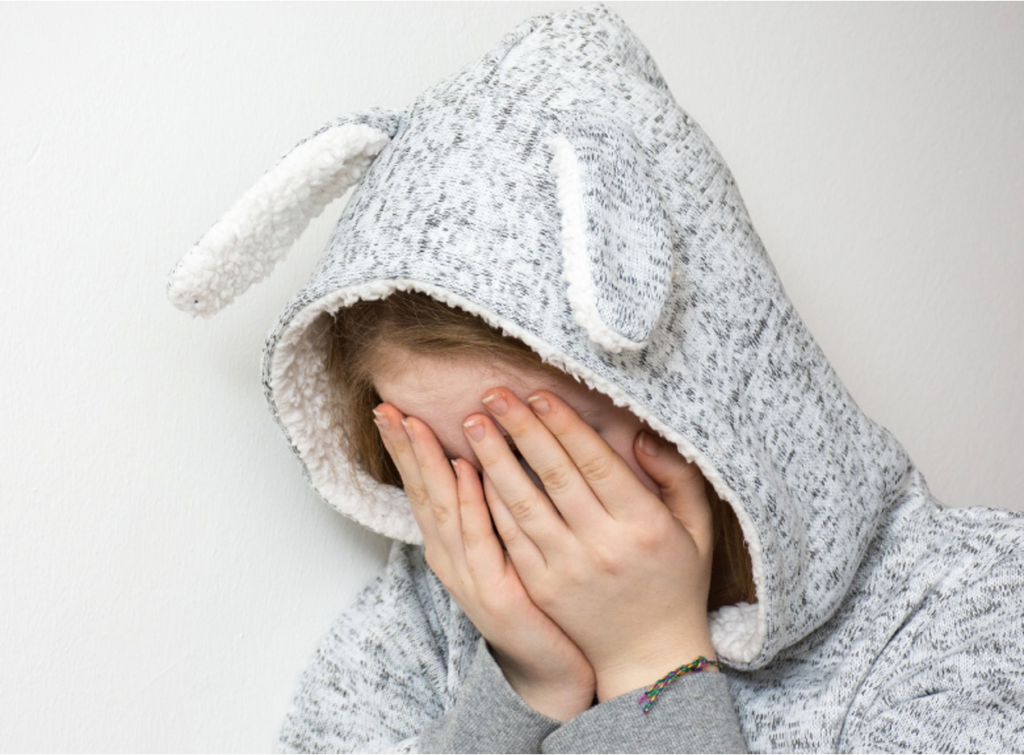
Teens who self-harm often struggle to regulate their emotions.
6. Shame, Defensiveness, or Anger When Asked About Injuries
When you ask your teen about a mark or an injury and their response is disproportionately defensive, dismissive, or angry, that reaction itself is informative. A teen with nothing to hide typically does not react with intense emotion to a simple question about how they hurt themselves.
Shame is one of the most powerful forces driving self-harm behavior underground. Teens who self-harm often feel deep embarrassment about what they are doing, and the prospect of being discovered can trigger an immediate defensive response. What looks like anger is frequently fear and shame wearing a different mask.
What to Do When You Spot These Warning Signs
The immediate priority is making your teen feel safe enough to talk, not pressuring them into a confession. From there, your goal is to connect them with professional support as quickly as possible while maintaining the trust you have worked to build.
Start the Conversation Without Pushing Them Away
Don’t confront your teen. Instead, approach them calmly and start a conversation with them. Here are some pointers to guide you:
- Choose a calm, private moment, not immediately after a conflict or in front of others, and lead with love and concern, not rules or consequences.
- Use open-ended questions like “How have you been feeling lately?” rather than accusatory statements, ensuring you validate their emotions before offering solutions or advice.
- Be comfortable with silence, and make it clear that getting help is not a punishment; it is support.
Seek Professional Help
If your teen confirms they are self-harming, or if you strongly suspect it based on multiple warning signs, do not try to handle it alone. Self-harm is a mental health issue that requires professional support. A licensed therapist who specializes in adolescent mental health and NSSI can provide the tools and framework your teen needs to develop healthier coping strategies.
Document what you have observed (specific marks, behavioral changes, dates, and context) before seeking professional help. This information gives clinicians a clearer picture and speeds up the assessment process.
If your teen’s wounds are severe, if they have expressed suicidal thoughts, or if you believe they cannot be kept safe at home, contact a crisis line or call Clearfork Academy at (888)-594-8699. We are available 24/7 by call or text. Do not wait for the situation to escalate further before acting.

If you strongly suspect that your teen is self-harming, reach out to a licensed therapist immediately.
Warning Signs of Self-Harm in Teens: Summary Table
| Category | Warning Sign | What to Watch For |
| Physical | Unexplained cuts, burns, or marks | Clustered marks, parallel lines, repeated injuries in the same location |
| Behavioral | Concealing clothing in warm weather | Long sleeves, layered clothes, or accessories that never come off |
| Behavioral | Social withdrawal | Avoiding family, losing friends, skipping activities they previously enjoyed |
| Behavioral | Hidden sharp objects | Razors, pins, and broken glass found in unusual places, like under a mattress |
| Emotional | Extreme reactions to stress | Intense emotional responses to rejection, failure, or conflict |
| Emotional | Defensiveness about injuries | Disproportionate anger or shame when asked simple questions about marks |
Help Your Teen Heal With Clearfork Academy
If you find out that your teen is self-harming, your next step should be to reach out to the professionals. At Clearfork Academy, a Christ-centered treatment facility in Fort Worth, Texas, we specialize in helping adolescents work through the underlying emotions, trauma, and mental health challenges that drive self-harming behaviors.
Our evidence-based approach combines therapies such as Dialectical Behavior Therapy (DBT) and Cognitive Behavioral Therapy (CBT) with medication management, family involvement, and holistic activities like creative arts and outdoor recreation to support whole-person healing.
Take the first step toward recovery today
Frequently Asked Questions (FAQs)
Is self-harm always related to suicidal thoughts?
No. Self-harm is formally classified as Non-Suicidal Self-Injury (NSSI) precisely because it is often distinct from suicidal intent. Most teens who self-harm do so as a way to cope with overwhelming emotional pain, not because they want to end their lives. That said, self-harm does increase the risk of suicidal ideation over time, which is why early professional intervention is so important regardless of intent.
At what age do teens typically start self-harming?
Self-harm most often begins during the preteen or early teenage years. The behavior tends to emerge when emotional regulation skills are still underdeveloped and social pressures are intensifying simultaneously. Early awareness and open communication during these years is one of the most effective forms of prevention.
Should I confront my teen directly if I find evidence of self-harm?
The word “confront” sets the wrong tone. Instead of confronting, approach. Come to your teen calmly, privately, and with expressed concern rather than anger or accusation. Your goal is to open a conversation, not to force a confession. The way you handle the first conversation significantly shapes whether your teen sees you as a safe person to be honest with going forward.
Can social media cause teens to start self-harming?
Social media does not cause self-harm on its own, but it can be a contributing factor — particularly for teens who are already emotionally vulnerable. Exposure to self-harm content online can normalize the behavior and provide a community that, despite its supportive appearance, may reinforce harmful coping patterns rather than encourage recovery. Monitoring and open conversations about online content are practical protective steps.
Where can I find a mental health professional who specializes in teen self-harm?
At Clearfork Academy, we offer specialized treatment programs designed specifically for teenagers who are struggling with self-harm and the underlying emotional issues that drive it. Our approach is built around evidence-based therapeutic methods tailored to the adolescent experience, addressing not just the behavior itself but the emotional pain at its root. Our programs are designed to stop self-harm while building a sustainable foundation for emotional health and resilience.
*Disclaimer: This content is for informational purposes only and is not a substitute for professional medical or addiction treatment advice. Consult a qualified professional for guidance. For more information, visit Clearfork Academy.