Many parents assume opioid misuse only happens to other families, until they notice a change in their own teen. If you are seeing secrecy, drowsiness, or disappearing pills, it’s time to pay attention. Teen opioid misuse and overdose risk remain serious concerns, especially because fentanyl is driving many youth overdose deaths.
Recent data show that teen opioid harm remains a major public-health concern. And, Fentanyl has been a major driver of adolescent overdose deaths in recent years. CDC.
This guide will help you with the clarity and next steps you need.
Why Teens Misuse Opioids
Teens who misuse opioids get them from friends, relatives, or unsecured medications at home. Many start using them because they’re curious, stressed, or trying to fit in.
One of the main problems today is fake “Oxy” or “Perc” pills being sold online or by friends. They can secretly contain fentanyl.[KFF Report]
10 Opioids Teens Commonly Misuse
1. Oxycodone (OxyContin, Percocet)
One of the most frequently misused prescription painkillers. Teens chase the euphoric high or the numbing effect that reduces stress or emotional pain. Widely diverted from home medicine supplies.
2. Hydrocodone (Vicodin)
Often prescribed after dental procedures or injuries. Teens may take extra doses or use leftover tablets because they mistake it as “safe” since they come from a doctor.
3. Codeine (Tylenol #3, Cough Syrup)
Common in cough syrups misused for “lean” or “purple drank.” Its slower onset can lead to accidental overdose when teens keep redosing.
4. Fentanyl (Illicit “M30” Pills)
The most dangerous opioid in circulation. 50x stronger than heroin. Fake oxycodone pills sold online or at parties now frequently contain fentanyl, driving most teen overdose deaths.
5. Morphine
Sometimes these are misused after surgery or taken from hospital supplies. They can cause strong drowsiness and lead to dependence very quickly.
6. Hydromorphone (Dilaudid)
This drug works quickly and has a powerful effect. If teens crush or inject it, the danger rises even more and the chance of overdose goes up.
7. Heroin
Use among younger teens is still low, but older teens sometimes transition to heroin when pills become harder to access. Much of today’s illicit opioid supply may contain fentanyl or other synthetic opioids, which can increase overdose risk.
8. Tramadol
It is often marketed as a “weaker” opioid. This false information leads teens to underestimate its addictive potential and causes dependence and dangerous interactions.
9. Buprenorphine (Suboxone)
It is a medicine used to treat opioid addiction, but some teens misuse it to get a mild high or to avoid complete withdrawal symptoms from stronger opioids.
10. Methadone
Primarily used in clinics. Sometimes diverted. Long-acting nature increases overdose risk when teens stack doses.
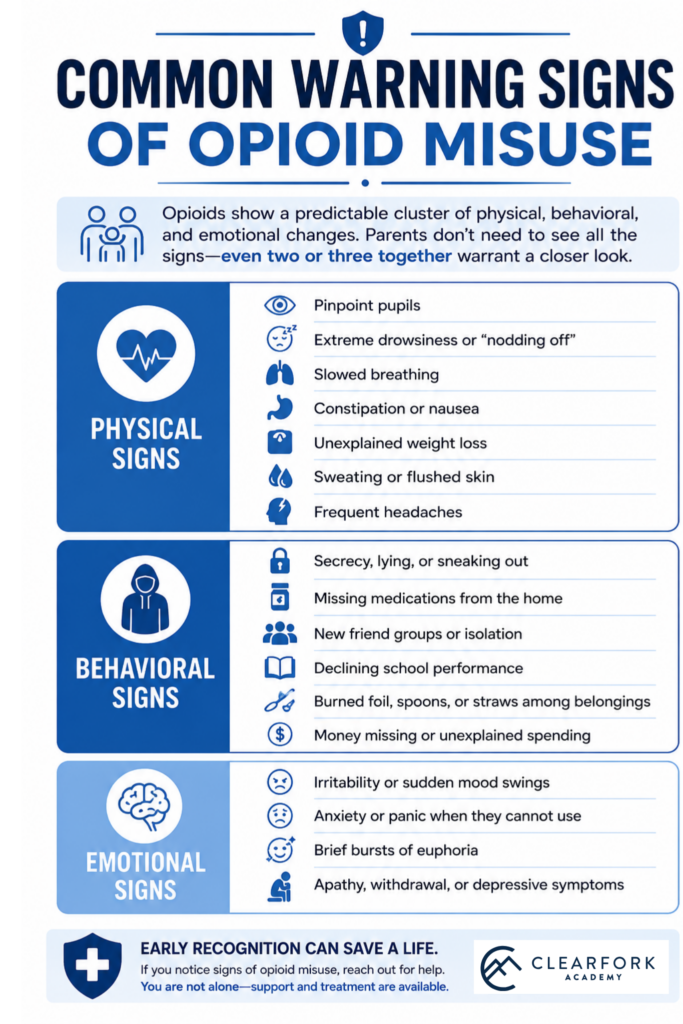
10 Opioid Warning Signs in Teens
- Extreme drowsiness or “nodding off”.
- Pinpoint pupils.
- Slow, shallow, or irregular breathing.
- Slurred speech or poor coordination.
- Secrecy around phone, friends, or social media.
- Missing medications from home.
- Unexplained spending, packages, or pill bottles.
- Mood swings, irritability, or withdrawal from family.
- Nausea, sweating, chills, or body aches.
- Trouble staying awake or responding normally.
What Parents Should Do Right Now
1. Secure and Monitor All Medications
Locking up medications and disposing of leftovers can reduce easy access to opioids at home.
2. Start a calm and caring conversation
Approach your teen gently and without confrontation. A simple line like, “I have been noticing a few things lately. You can talk to me. I’m here to help, not punish,” will open the door.
Ask thoughtful, open-ended questions about their friends, school environment, or whether they have encountered pills at parties or online. The focus should be on connection, not interrogation.
3. Educate Them Without Fear
Share what you know about opioids, fake pills, overdoses, and why certain combinations (like pills and alcohol) are so dangerous.
Teens often know more than they show. So ask them simple questions like, “What have you heard about this?” Keep your tone factual, calm, and non-threatening.
4. Watch for Repeating Patterns
Pay attention to their repeated patterns like, unusual drowsiness, missing medications, unexplained spending, or odd packaging.If your concerns grow, a drug test may be one tool to discuss with a healthcare professional, but it should not replace an honest conversation or professional evaluation.
5. Reach Out for Professional Help If Needed
If your teen shows multiple warning signs and admits that they have used pills, struggles to stop, or shows withdrawal symptoms, it’s time to bring them to professional help.
Early intervention is one of the strongest ways of recovery, and teen-specific treatment programs can make a critical difference.
How Clearfork Can Help
At Clearfork Academy, we walk alongside youth and families with the belief that Christ is the source of hope and healing. If you are ready to take the next step, we are here to help your teen discover their inherent potential and create a new legacy.
Clearfork specializes in teen-focused substance use treatment, offering:
- Medical detox when needed
- Cognitive Behavioral Therapy (CBT)
- Outdoor adventure therapy
- Family-based support
Insurance coverage for teen rehab may depend on your plan, your teen’s clinical needs, the recommended level of care, authorization requirements, and whether services are in-network or out-of-network. The safest next step is to verify your teen’s benefits before starting care:- Verify Insurance
When This is an Emergency – Call 911 immediately if your teen is unresponsive, has slow or stopped breathing, or has blue lips or fingernails. If available, give naloxone while you wait for emergency help.

Mike Carter, LCDC
Alumni Relations Manager
Mike grew up on a dairy farm in Parker County, Texas. At the age of 59, he went back to college and graduated 41 years after his first graduation from Weatherford College. God placed on his heart at that time the passion to begin to help others as they walked from addictions, alcoholism, and abuse of substances. He is a Licensed Chemical Dependency Counselor and in the past few years he has worn many hats, from intake and assessment, group counseling, individual and family counseling, intensive outpatient and now he is working with clients, therapist, and families on discharge planning and aftercare. He also coordinates our Alumni Outreach Program.