Key Takeaways
- A teen with borderline personality disorder (BPD) may react to small rejections, like a delayed text, with intense fear of abandonment, clinging to people or pushing them away first.
- Relationships can swing between idealizing and turning against the same person, and BPD mood swings tend to last a few hours to a few days, shorter than bipolar mood changes.
- Impulsive behavior often shows up in more than one risky area, such as reckless driving, drug use, or spending sprees, and self-harm or suicidal threats can follow feeling rejected.
- Constant emptiness, outsized anger, a shifting sense of self, and brief periods of suspicion or detachment under stress are quieter signs parents often miss.
- At Clearfork Academy, we help teens showing these signs through Dialectical Behavior Therapy (DBT), a skills-based therapy that includes parents, and treat any substance use alongside it.
BPD Signs Versus Normal Teen Moodiness
BPD signs differ from normal teen moodiness in how intense they are, how often they repeat, and how much damage they do to relationships, school, and a teen’s sense of who they are. Ordinary adolescent moods pass quickly and leave daily life mostly intact. The patterns linked to BPD tend to keep returning across friendships, family life, and the classroom, and each episode often looks like the last one.
Tracking what you see makes that difference easier to judge. A short note on each episode, covering what set it off, how long it lasted, and whether it happened at home, at school, or with friends, gives a doctor or therapist far more to work with than a parent’s memory of the worst nights.
Clearfork Academy: Texas’ Teen Treatment Center for Drug, Alcohol & Mental Health
Detox, Residential, PHP, IOP & Virtual IOP | Christian-Founded | 9 Years Serving Families

Your Teen Doesn’t Have to Stay Stuck: Clearfork Academy guides teens aged 13–17 through every stage of crisis, from medically supervised detox to virtual outpatient, with gender-specific, faith-integrated care that keeps kids in school and supports families long after discharge. Within just one month, patients show measurable results.
What Sets Clearfork Apart:
✓ Full care continuum across 4 Texas locations, serving families nationwide
✓ Dual diagnosis treatment: mental health and substance use addressed together
✓ After 30 days: 57% reduction in cravings, 47% decrease in depression
✓ Lifelong alumni support, regardless of which program your teen completes
Recovery isn’t a destination; it’s a path. Let Clearfork walk it with your family.
What Are the Signs of Borderline Personality Disorder in Teens?
1. Intense Fear of Abandonment
A teen with this sign may go to extreme lengths to avoid being left, rejected, or separated from someone they depend on, even when the threat exists only in their head. This often shows up as:
Extreme Reactions to Real or Imagined Rejection
A canceled plan, a delayed text response, or a friend spending time with someone else can trigger a reaction far out of proportion to the event. The teen may take ordinary disagreements or small slights as proof they’re about to be abandoned, even when nothing has actually changed in the relationship.
This fear often drives behavior that looks confusing from the outside, such as sudden anger toward a parent who leaves for a work trip or panic when a friend doesn’t answer a call right away. The reaction stems from a core belief that abandonment is imminent, not from the actual likelihood of it happening.
Clinging Behavior or Sudden Panic Over Separation
Some teens respond by clinging tightly to a parent, partner, or friend and struggling to handle even normal time apart. Others swing the other way, pushing people away before they can be left, which can look like defiance or indifference but is really fear.
2. Unstable & Intense Relationships
Relationships for a teen with BPD tend to swing between extremes, with little middle ground. Some everyday signs you could notice include:
Idealizing Someone, Then Suddenly Turning Against Them
This pattern, sometimes called “splitting,” means a teen may describe a new friend as the best person they’ve ever met, then describe that same friend days later as cruel or worthless after a small conflict. The shift happens quickly and can feel absolute to the teen in the moment, making relationships feel unstable for everyone involved.
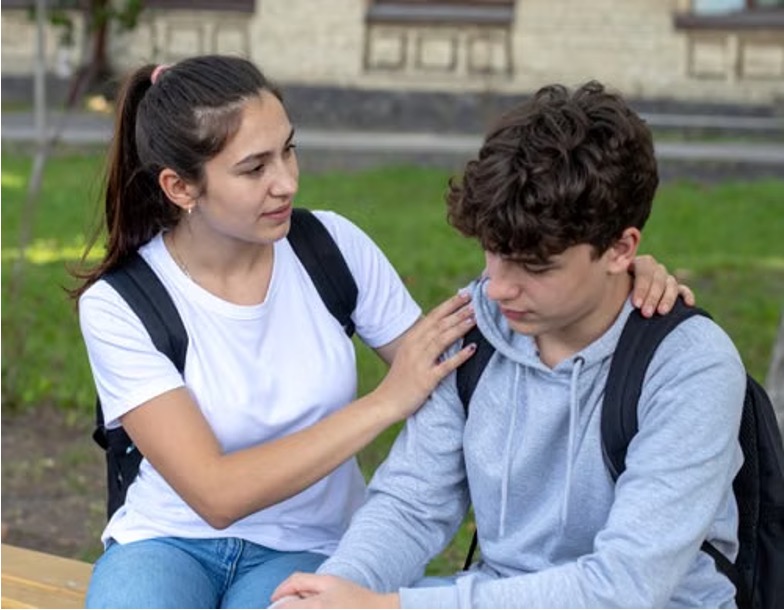
Teens with this sign may swing between idealizing and rejecting people, often after a minor disagreement or perceived slight.
Black-or-White Thinking About People
Teens showing this sign often see people as all good or all bad and struggle to accept that someone can have both good and frustrating qualities at the same time. A teacher who gives one piece of critical feedback might suddenly be labeled as someone who “hates” the teen, wiping out whatever positive view existed before.
3. Rapid Mood Swings & Intense Emotional Reactions
Mood swings in BPD last longer than a typical teenage outburst but shorter than the sustained low mood seen in depression. A teen can shift from content to furious to despairing within the same afternoon, and the trigger is often something small that an outside observer wouldn’t consider significant. Two patterns help parents narrow this to BPD rather than ordinary moodiness:
Episodes Lasting Hours to a Few Days
Clinically, this reactivity is described as mood episodes lasting anywhere from a few hours to a few days, distinguishing it from bipolar disorder, where mood episodes typically last weeks. A parent might notice their teen laughing at dinner, then slamming a door an hour later over something that seems minor, then calm again by bedtime.
Cycles of Irritability, Anxiety, & Shame
These swings often cycle through irritability, anxiety, and shame rather than settling into one steady emotional state. The unpredictability itself becomes exhausting for the teen and the family, since nobody can reliably predict which version of the teen’s mood will show up next.
4. Impulsive & Risky Behavior
The emotional instability behind the first three signs often spills into action, leading to impulsive behavior that shows up in more than one area. The behaviors parents should watch for include:
Reckless Driving, Unsafe Sex, & Substance Misuse
A teen may drive at dangerous speeds, have unprotected sex with near strangers, or misuse alcohol or drugs, often without appearing to weigh the consequences beforehand. These behaviors can get worse during emotionally difficult periods.
Spending Sprees, Binge Eating, & Gambling
- Sudden spending sprees that drain savings or rack up debt
- Binge eating episodes disconnected from physical hunger
- Gambling, including online betting apps
A single shopping spree or binge does not point to BPD on its own. The concern grows when the same impulsive pattern repeats across different situations.

Impulsive behavior across several areas of life, like reckless driving or spending sprees, is one sign doctors look for in teens.
5. Self-Harm or Suicidal Threats
When emotional pain crosses a threshold the teen cannot manage, some respond by hurting themselves physically rather than sitting with the feeling. Repeated self-harm, or threats and gestures toward suicide, is one of the most serious signs doctors assess for BPD, and parents may notice it in two forms:
Cutting, Burning, or Other Self-Injury
Cutting, burning, or punching walls are some of the ways teens with BPD may hurt themselves, often as a way to numb overwhelming emotional pain and not always as an attempt to end their life. That distinction matters for how parents respond, but it never makes the behavior less urgent to address with a professional.
Self-Harm as a Response to Fear of Rejection
Self-harm and suicidal threats often surface right after a teen fears they’re being abandoned or rejected, which ties this sign back to the first one. If your teen is having thoughts of suicide, call or text the 988 Suicide & Crisis Lifeline, and in a life-threatening situation, call 911 immediately.
What Are Subtle Signs of BPD in Teens?
Beyond the five signs above, a handful of subtler symptoms round out the full diagnostic picture clinicians use, and parents sometimes overlook these because they’re less visible day to day.
- Constant feelings of emptiness: A teen might describe feeling empty or numb much of the time, even during activities that used to bring them joy.
- Difficulty controlling anger: Anger that seems far bigger than the situation, showing up as frequent loss of temper, sarcasm, bitterness, or physical fights, is another sign doctors look for.
- Feeling suspicious or detached under stress: Under a lot of stress, some teens go through short stretches, lasting minutes to hours, of feeling suspicious of others or detached from what’s happening around them.
- Shifting sense of self and goals: A shaky sense of self can make a teen’s goals, values, and even career interests change dramatically and repeatedly, and some teens say they feel like they don’t really exist.

Subtle signs of BPD in teens include chronic emptiness, outsized anger, stress-related detachment, and a constantly shifting sense of self.
Turn Early BPD Signs Into a Treatment Plan with Clearfork Academy
Each of these signs can show up in a typical teen at some point. What sets BPD apart is the same cluster of behaviors returning across relationships and settings, and parents who spot that pattern early may give their teen a better chance of getting the right support before the instability becomes harder to change.

Clearfork Academy treats teens showing signs of BPD with DBT and parent skills training; call admissions at (888) 430-5149 to learn more.
Clearfork Academy’s licensed therapists use DBT skills training, with parents included directly in sessions, alongside dual diagnosis care for teens facing both mental health and substance use challenges. Call (888) 430-5149 to talk with our team about whether this approach fits your teen’s situation.
Frequently Asked Questions
Is BPD in Teens Just Attention Seeking?
No, behavior that looks like attention seeking in a teen with BPD signs is often driven by fear of abandonment or an attempt to numb emotional pain. Self-harm, for example, can be a way to cope with overwhelming feelings, and it still needs a professional response.
What Triggers BPD Episodes in Teens?
Feeling rejected is one of the most common triggers, such as a canceled plan, a delayed text, or a friend spending time with someone else. Heavy stress can also trigger brief periods of suspicion or detachment, even when nothing in the teen’s relationships has actually changed.
Is Self-Harm Always a Sign of BPD?
No, self-harm on its own does not mean a teen has BPD. It is one of several signs doctors look for, and it points more strongly toward BPD when it follows a fear of rejection and appears alongside other signs like unstable relationships or rapid mood swings.
Can Drug Use Be a Sign of BPD in Teens?
Yes, it can be, since drinking or drug use is one of the risky, impulsive behaviors sometimes linked to BPD in teens. It may spike during emotionally hard periods, so substance use that rises after conflict or rejection could be tied to the same instability behind the other signs.
Does Clearfork Academy Offer Outpatient Treatment for Teens With BPD?
Yes, Clearfork Academy offers day treatment and outpatient programs as well as live-in residential campuses for boys and girls. That range lets us match the level of care to how severe and frequent your teen’s symptoms are, and you can see how our programs work before deciding.
*Disclaimer: This content is for informational purposes only and is not a substitute for professional medical or addiction treatment advice. Consult a qualified professional for guidance. For more information, visit Clearfork Academy.