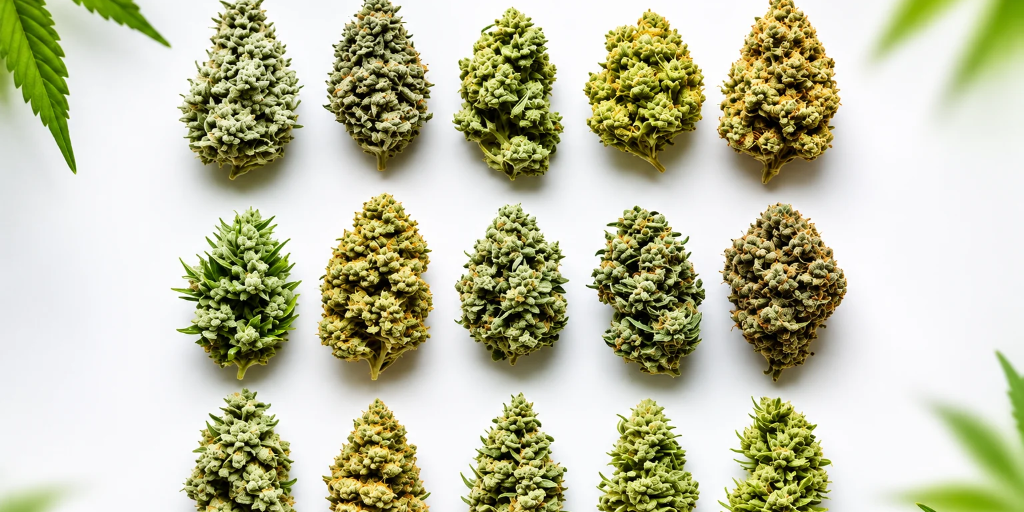
THCA and THC are closely related cannabinoids, but they do not affect the body in the same way. THCA is found naturally in cannabis and is generally non-intoxicating before heating. THC is the compound primarily responsible for cannabis intoxication.
THCA flower can get teens high when smoked or vaped because heat converts THCA into THC. Understanding that conversion helps explain why a product marketed as THCA or hemp flower can still produce significant psychoactive effects. [9]
If a teenager develops severe confusion, hallucinations, repeated vomiting, or other concerning symptoms after cannabis use, seek prompt medical care. Call 911 for seizures, unresponsiveness, or severe breathing difficulties. For suspected poisoning in the United States, call Poison Control at 1-800-222-1222.
What Is THCA?
THCA (tetrahydrocannabinolic acid) is a naturally occurring compound found in cannabis before it is heated. It is the chemical precursor to delta-9 THC, the cannabinoid responsible for the characteristic cannabis high. [3]
Unlike THC, THCA is not generally associated with the characteristic cannabis high. However, that distinction depends on the compound remaining unheated and on the presence of any other cannabinoids in the product.
What Is the Chemical Composition of THCA?
THCA has the molecular formula C₂₂H₃₀O₄ and a molecular weight of approximately 358.5 g/mol. [1]
Its structure contains a carboxyl group (-COOH), which distinguishes it from delta-9 THC. Removing this group through decarboxylation changes THCA into THC.
The chemical structure is documented in the National Library of Medicine’s PubChem database.
How Does THCA Work in the Body?
THC produces intoxication primarily by activating cannabinoid type 1 (CB1) receptors in the brain. These receptors help regulate functions such as memory, mood, and coordination. Unheated THCA does not activate them in the same way and is not generally intoxicating. [3]
Research suggests that THCA may influence other biological targets involved in inflammation, cellular signaling, and nervous-system function. However, its mechanisms remain incompletely understood, and laboratory findings do not establish how it will behave in humans at different exposure levels. [3]
What Are the Potential Effects and Benefits of THCA?
Preclinical studies have investigated THCA for possible anti-inflammatory, neuroprotective, and anti-nausea effects. These findings come primarily from laboratory and experimental research rather than established clinical treatments.
Human evidence remains limited, and THCA has no FDA-approved medical indication. Its potential biological activity does not establish safety or therapeutic benefits for teenagers. [3][5]
What Is THC?
THC (tetrahydrocannabinol) is the main intoxicating cannabinoid associated with cannabis. In most discussions, THC refers specifically to delta-9 tetrahydrocannabinol.
THC may already be present in cannabis flower, and additional THC can form when naturally occurring THCA undergoes decarboxylation.
What Is the Chemical Composition of THC?
Delta-9 THC has the molecular formula C₂₁H₃₀O₂ and a molecular weight of approximately 314.5 g/mol. [2]
Compared with THCA, it lacks the additional carboxyl group.
THC is a lipid-soluble compound, meaning it dissolves more readily in fats than in water. This property influences its distribution within the body and contributes to its pharmacological characteristics. [2]
The molecular information is documented in PubChem’s THC compound record.
How Does THC Affect the Brain and Body?
THC interacts with cannabinoid receptors called CB1 and CB2, which are part of the body’s endocannabinoid system. Its activation of CB1 receptors in the brain is primarily responsible for its intoxicating effects. [3]
CB1 receptors are abundant in brain regions involved in memory, emotional processing, movement, and coordination. THC’s interaction with these receptors helps explain its effects on thinking, perception, and behavior. [3]
Possible effects include relaxation or euphoria, altered sensory perception, increased appetite, reduced coordination, and impaired short-term memory. [6][12]
However, not everyone experiences THC in the same way. Some people develop anxiety, panic, paranoia, or significant confusion, particularly following greater exposure. [8][9]
The CDC identifies memory, learning, attention, decision-making, and coordination among the functions that cannabis can affect. [6]
What Are the Effects and Medical Uses of THC?
Unlike THCA, THC has been studied in human clinical trials, and certain prescription THC-related medications are FDA-approved for specific conditions, including chemotherapy-related nausea and vomiting. These approvals apply to regulated medicines, not cannabis flower or commercially sold THC products. [4]
THCA vs. THC: What Are the Key Differences?
THCA and THC differ in chemical structure, intoxicating effects, receptor activity, and medical evidence. The comparison below summarizes these differences.
| Feature | THCA | Delta-9 THC |
|---|---|---|
| Full name | Tetrahydrocannabinolic acid | Delta-9 tetrahydrocannabinol |
| Molecular formula | C22H30O4 | C21H30O2 |
| Molecular weight | Approximately 358.5 g/mol | Approximately 314.5 g/mol |
| Natural occurrence | Abundant in many fresh cannabis plants | Present naturally and formed from heated THCA |
| Intoxicating properties | Not generally intoxicating when unheated | Produces the characteristic cannabis high |
| CB1 receptor activity | Different and less well-characterized pharmacology | Established partial agonist activity |
| Effect of heating | Converts into THC | May undergo additional chemical changes or degradation |
| Potential benefits | Early laboratory and preclinical findings | Clinical evidence supporting selected prescription formulations |
| FDA-approved medical use | None | Specific prescription dronabinol products; nabilone is an approved related synthetic cannabinoid |
| Main adolescent concern | Potential THC exposure after heating; limited THCA-specific safety evidence |
Impairment, cognitive effects, mental health concerns, and cannabis use disorder |
How Does THCA Convert Into THC?
What Is Decarboxylation?
Decarboxylation is a chemical reaction in which THCA loses a carboxyl group and releases carbon dioxide, forming delta-9 THC.
Heat accelerates this process, although slower conversion can occur under certain storage conditions. Conversion efficiency varies with temperature, duration, and product characteristics. [3]
What Happens When THCA Flower Is Smoked or Vaped?
Smoking or vaping exposes THCA flower to heat, allowing some THCA to convert into intoxicating delta-9 THC. The resulting THC can enter the bloodstream and affect perception, memory, coordination, and judgment. [9]
The amount absorbed depends on the product and how it is used. A THCA or hemp label does not guarantee that the heated product will be non-intoxicating.
THCA vs. THC: Which Is Stronger?
The answer depends on whether you’re comparing the compounds themselves or the intoxicating potential of cannabis flower. THCA and delta-9 THC have different pharmacological effects, but a THCA-rich product can produce substantial THC exposure when heated.
Does THCA Have the Same Potency as THC?
Unheated THCA does not have the same established intoxicating activity as delta-9 THC. However, THCA-rich flower may deliver substantial THC exposure when smoked or vaped.
The strength of the resulting intoxication depends on the product’s cannabinoid composition, the amount used, conversion during heating, and individual sensitivity. [9]
Why Do THCA and Total THC Percentages Differ?
Cannabis laboratory reports may show separate values for THCA, delta-9 THC, and total potential THC.
Total potential THC is commonly estimated using: [9]
Total THC (%) = Delta-9 THC (%) + [THCA (%) × 0.877]
The 0.877 factor accounts for the difference in molecular weight when THCA loses carbon dioxide during conversion. [11]
Consider a hypothetical laboratory report:
| Cannabinoid Measurement | Reported Concentration |
|---|---|
| THCA | 24% |
| Delta-9 THC | 0.2% |
| Calculated Total Potential THC | 21.25% |
| The calculation is 0.2 + (24 × 0.877) = 21.248%. | |
A product containing only 0.2% measured delta-9 THC could therefore have approximately 21.25% total potential THC.
This is a theoretical laboratory estimate, not the amount a person will inhale or absorb. Actual exposure depends on heating efficiency, product characteristics, and use patterns. [3]
The practical point: A low delta-9 THC percentage on a label does not necessarily mean that a THCA-rich product has low intoxicating potential.
THCA vs. THC: Are Their Health Benefits Different?
THCA’s potential therapeutic properties remain largely investigational. THC has undergone more extensive human research, and certain prescription THC formulations have established medical uses. [3]
What Does Research Suggest About THCA’s Therapeutic Potential?
Early research has explored whether THCA can influence inflammation, protect nerve cells, or affect nausea-related pathways. However, most findings come from laboratory studies or experimental models. Researchers have not established whether these effects translate into meaningful clinical benefits for people. [3]
THCA has no FDA-approved medical indication, and current evidence is insufficient to recommend it as a treatment for teenagers. [3][5]
What Medical Uses of THC Are Supported by Clinical Evidence?
The strongest regulatory evidence concerns specific prescription medications rather than cannabis flower.
FDA-approved dronabinol formulations are used for defined medical indications involving chemotherapy-related nausea and vomiting and AIDS-associated appetite loss. [4]
Nabilone, a synthetic cannabinoid related to THC, is approved for certain cases of chemotherapy-associated nausea and vomiting. [4]
Other potential medical applications of cannabinoids remain under investigation, and evidence varies by condition and formulation.
Medical supervision is important because THC-related medications can cause adverse effects and interact with other medications.
For parents: Potential medical benefits discussed in cannabinoid research should not be interpreted as evidence that recreational THCA or THC use is therapeutic or appropriate for teenagers.
What Are the Side Effects and Health Risks of THCA vs. THC?
The health risks of THC are better documented than those of isolated, unheated THCA.
Because heated THCA can produce THC, teenagers who smoke or vape THCA flower may experience many of the same risks associated with cannabis intoxication.
Short-Term Side Effects
THC exposure may produce:
- Impaired short-term memory and concentration
- Slower reaction time and reduced coordination
- Altered perception of time and surroundings
- Increased heart rate
- Dizziness or nausea
- Anxiety, panic, or paranoia
- Confusion or hallucinations following substantial exposure [6][8][9][13]
The CDC notes that excessive cannabis exposure can sometimes produce severe psychological and physical symptoms.
Isolated THCA has not been studied sufficiently in humans to establish a comprehensive adverse-effect profile. This lack of evidence should not be interpreted as proof of safety. [3]
Risks Associated With Frequent or Long-Term THC Exposure
Frequent cannabis use during adolescence is associated with problems involving attention, learning, and memory, as well as a higher risk of cannabis use disorder. Research also identifies associations with certain mental health conditions, although these relationships are influenced by several factors. [6][7][8]
Cannabis use has also been associated with psychotic symptoms, with stronger associations observed in people who begin earlier and use more frequently. [6][8]
The relationship between cannabis and psychiatric conditions is complex. Research does not establish that cannabis independently causes every mental health outcome associated with its use.
Smoking cannabis can additionally expose the respiratory system to harmful combustion products, while vaping introduces its own product- and device-related risks.[14][9]
Why Are Teenagers More Vulnerable to Cannabis-Related Harm?
The adolescent brain is still developing systems involved in memory, judgment, emotional regulation, and decision-making. THC exposure can temporarily impair several of these functions.
The CDC identifies concerns about school functioning and cannabis use disorder, particularly when use begins early or becomes frequent. Long-term outcomes vary, and these associations do not mean every teenager who experiments with cannabis will develop lasting impairment. [6][7]
THCA vs. Delta-8 THC vs. Delta-9 THC vs. CBD
Cannabis contains multiple cannabinoids, but their chemical similarities do not mean they produce identical effects.
| Cannabinoid | Intoxicating Potential | Key Distinction |
|---|---|---|
| THCA | Not generally intoxicating before heating | Acidic precursor that can convert into delta-9 THC |
| Delta-8 THC | Intoxicating | Structurally related to delta-9 THC; safety and product-quality concerns |
| Delta-9 THC | Intoxicating | Principal compound responsible for the characteristic cannabis high |
| CBD | Not typically intoxicating | Different pharmacology; purified CBD is used in certain FDA-approved seizure treatments [5][9] |
Delta-8 THC is often marketed as milder than delta-9 THC, but it can still impair cognition and coordination. Product manufacturing and contamination concerns also require attention.[15]
CBD is distinct from both THC and THCA. Although purified pharmaceutical CBD has approved medical applications, ordinary CBD products should not be assumed equivalent to prescription medication.
Are THCA and THC Legal in the United States?
THCA and THC regulations depend on federal law, state law, product composition, and how a cannabis product is classified.
Under the 2018 Farm Bill framework, federal hemp classification relied on a threshold of no more than 0.3% delta-9 THC by dry weight. This distinction contributed to the marketing of some THCA-rich products as hemp. [10]
However, hemp-production testing requirements also account for THCA’s potential conversion into THC. A low delta-9 THC concentration alone has never guaranteed that a particular product satisfies every applicable regulatory requirement.
Federal legislation enacted in November 2025 amended the hemp definition to include a total THC concentration standard that expressly accounts for THCA. [10]
As of November 19, 2026, most of these federal hemp-definition changes are scheduled to take effect on December 11, 2026. Certain provisions concerning cannabinoids that cannot naturally be produced by cannabis took effect on November 12, 2026. [10]
State laws may be more restrictive and can regulate or prohibit products that might otherwise meet federal hemp definitions.
The legal classification of a product should not be confused with its safety, and adult cannabis laws do not generally permit recreational cannabis use by minors.
Legal information reflects the legislation available as of the article’s update date and should be reviewed before publication or future updates.
What Should Parents Know About THCA and THC Use in Teens?
Parents should focus on three questions when discussing THCA or THC use with their teenager: What product was used? How often is cannabis being used? Is it affecting the teen’s health, relationships, school performance, or daily functioning?
Can THCA Flower Get Teens High?
Yes. A teenager who smokes or vapes THCA flower can experience cannabis intoxication, even if the product is marketed as hemp.
Parents should ask what product was used, whether it was smoked or vaped, and whether the teenager experienced confusion, anxiety, impaired coordination, or other concerning symptoms. The product name alone cannot establish its actual potency or safety. [9]
What Are the Warning Signs of Problematic Cannabis Use?
Potential warning signs include:
- Repeated episodes of impaired coordination, unusual sleepiness, or red eyes
- Changes in concentration or school performance
- Increasing cannabis use or difficulty reducing it
- Irritability, sleep disturbance, or cravings when not using
- Withdrawing from previously important activities
- Continuing to use cannabis despite family, academic, or emotional consequences [6][7]
These signs are not specific to cannabis use and should not be treated as proof.
Parents can begin with straightforward questions: What product did you use? Was it smoked, vaped, or eaten? How often have you used it? Have you experienced anxiety, confusion, or other unwanted effects?
These questions can help parents understand possible exposure and whether professional assessment may be appropriate.
When Should Parents Consider Professional Support?
Professional assessment is appropriate when cannabis use becomes frequent, affects school or family life, worsens emotional symptoms, or continues despite attempts to stop. [7]
A clinician can evaluate substance-use patterns, mental health symptoms, developmental needs, and family circumstances.
Not every teenager who has experimented with cannabis requires intensive treatment. Some may benefit from education, brief intervention, or outpatient support. Others may need more structured treatment depending on the severity of their symptoms.
Seek urgent medical assistance if a teenager experiences severe confusion, hallucinations, seizures, difficulty breathing, loss of consciousness, or other serious symptoms after suspected cannabis exposure.
In the U.S., call 911 for an emergency or Poison Control at 1-800-222-1222 for poisoning guidance.
How Clearfork Academy Supports Teens With Cannabis-Related Concerns
Cannabis use in adolescence is not always an isolated behavioral issue. For some teenagers, repeated use occurs alongside anxiety, depression, difficulties regulating emotions, family conflict, or other behavioral health concerns.
Clearfork Academy provides mental health and substance use treatment for adolescents aged 13–17 in Texas.
An individualized clinical assessment helps identify the severity of cannabis-related concerns, any co-occurring mental health needs, and the appropriate level of care.
Depending on clinical needs, treatment options may include intensive outpatient programming (IOP), partial hospitalization programming (PHP), or residential treatment.
Care may incorporate cognitive behavioral therapy (CBT), dialectical behavior therapy (DBT) skills, family involvement, and other clinically appropriate approaches.
Families can explore Clearfork Academy’s substance use treatment services or verify insurance benefits.
Medical Disclaimer: This article is intended for general educational purposes and does not replace individualized medical advice, diagnosis, or treatment. If a teenager is experiencing an immediate medical emergency, call 911. For immediate emotional crisis support in the United States, call or text 988.
Frequently Asked Questions
- Is THCA the Same as THC?
No. THCA is an acidic cannabinoid that can convert into delta-9 THC through decarboxylation. Unlike THC, unheated THCA does not typically produce the characteristic cannabis high.
- Does THCA Turn Into THC Naturally?
Yes. THCA can gradually convert into THC under certain environmental and storage conditions. Heating accelerates the conversion, while ordinary storage conditions produce more variable and generally slower changes.
- Is THCA Stronger Than Delta-9 THC?
Unheated THCA does not have the same intoxicating activity as delta-9 THC. However, THCA-rich flower may produce significant THC exposure when heated, depending on its composition and use.
- Is THCA Naturally Occurring or Synthetic?
THCA is naturally produced by cannabis plants. It is one of the major acidic cannabinoids found in many cannabis varieties before heating.
- Can Unheated THCA Produce a High?
Pure, unheated THCA is not generally considered intoxicating. However, actual cannabis products may contain delta-9 THC and other cannabinoids, so their effects cannot be determined from the THCA label alone.
- Is THCA Safer Than THC?
There is insufficient clinical evidence to establish that THCA is safer than THC for teenagers. While unheated THCA has different pharmacological properties, heating converts it into THC, and long-term human safety evidence for isolated THCA remains limited.
References:
- [1] National Library of Medicine, PubChem. Delta-9-Tetrahydrocannabinolic Acid (THCA). Chemical composition and molecular characteristics.
https://pubchem.ncbi.nlm.nih.gov/compound/9-carboxy-THC - [2] National Library of Medicine, PubChem. Tetrahydrocannabinol (THC). Molecular formula and chemical identification.
https://pubchem.ncbi.nlm.nih.gov/compound/THC - [3] Therapeutic Potential of Acidic Cannabinoids: An Update. 2026. PubMed.
https://pubmed.ncbi.nlm.nih.gov/41545891/ - [4] U.S. Food and Drug Administration (FDA). FDA and Cannabis: Research and Drug Approval Process.
https://www.fda.gov/news-events/public-health-focus/fda-and-cannabis-research-and-drug-approval-process - [5] U.S. Food and Drug Administration (FDA). FDA Regulation of Cannabis and Cannabis-Derived Products, Including Cannabidiol (CBD).
https://www.fda.gov/news-events/public-health-focus/fda-regulation-cannabis-and-cannabis-derived-products-including-cannabidiol-cbd - [6] Centers for Disease Control and Prevention (CDC). Cannabis and Teens. February 15, 2024.
https://www.cdc.gov/cannabis/health-effects/cannabis-and-teens.html - [7] Centers for Disease Control and Prevention (CDC). Understanding Your Risk for Cannabis Use Disorder. December 5, 2024.
https://www.cdc.gov/cannabis/health-effects/cannabis-use-disorder.html - [8] Centers for Disease Control and Prevention (CDC). Cannabis and Mental Health. February 15, 2024.
https://www.cdc.gov/cannabis/health-effects/mental-health.html - [9] Centers for Disease Control and Prevention (CDC). Cannabis Frequently Asked Questions. Section: What is THCA and is it psychoactive or mind-altering?
https://www.cdc.gov/cannabis/faq/ - [10] Congressional Research Service (CRS). Changes to the Statutory Definition of Hemp and Implications for Agricultural Policy. Updated September 28, 2026.
https://www.everycrsreport.com/reports/IF13136.html - [11] U.S. Department of Agriculture (USDA), Agricultural Marketing Service. Laboratory Testing Guidelines: U.S. Domestic Hemp Production Program.
- https://www.ams.usda.gov/rules-regulations/hemp/information-laboratories/lab-testing-guidelines
- [12] Centers for Disease Control and Prevention (CDC). Cannabis and Brain Health. February 15, 2024.
- https://www.cdc.gov/cannabis/health-effects/brain-health.html
- [13] Centers for Disease Control and Prevention (CDC). Cannabis and Heart Health. February 15, 2024
- https://www.cdc.gov/cannabis/health-effects/heart-health.html
- [14] Centers for Disease Control and Prevention (CDC). Cannabis and Lung Health. February 15, 2024.
- https://www.cdc.gov/cannabis/health-effects/lung-health.html
- [15] U.S. Food and Drug Administration (FDA). 5 Things to Know about Delta-8 Tetrahydrocannabinol – Delta-8 THC.
- https://www.fda.gov/consumers/consumer-updates/5-things-know-about-delta-8-tetrahydrocannabinol-delta-8-thc
- [16] Jatlaoui TC, Wiltz JL, Kabbani S, et al. Update: Interim Guidance for Health Care Providers for Managing Patients with Suspected E-cigarette, or Vaping, Product Use–Associated Lung Injury — United States, November 2019. Morbidity and Mortality Weekly Report (MMWR). Centers for Disease Control and Prevention. November 22, 2019;68(46):1081–1086. Clinical guidance addressing vaping-associated lung injury, including cases involving THC-containing vaping products.
- https://www.cdc.gov/mmwr/volumes/68/wr/mm6846e2.htm

Shelby Hartman is a Licensed Master Social Worker with specialized training in EMDR (Eye Movement Desensitization and Reprocessing). She brings over a decade of experience in behavioral health, beginning her career as a Behavioral Health Technician at John Peter Smith Hospital’s Psychiatric Emergency Center, where she served for nine years supporting individuals in acute crisis.
She has also contributed to the community through volunteer work with Safe Haven in the Dallas–Fort Worth area, supporting survivors of domestic violence. She earned her Master of Social Work degree from Chamberlain University and went on to work as an inpatient program therapist for over two years, providing intensive therapeutic care to adolescents. Currently serving at Clearfork Academy, Shelby continues her work with teens navigating mental health challenges and substance use.